
As the data collection methods have extreme influence over the validity of the research outcomes, it is considered as the crucial aspect of the studies
May 2025 | Source: News-Medical
As the field of Artificial Intelligence (AI) evolves, B2B brands turn to effective meta-analysis via AI to inform their smarter data-informed strategies. The data generated from all customer touchpoints and market signal sources are overwhelming, and businesses need more than preliminary data—meta-analysis service offer encapsulation and comprehensive meta-analysis business synthesis to access more robust insights for B2B brands. This article addresses the importance of meta-analysis in B2B brands today and in the future of marketing that specifically will be AI-informed.[1]
Definition: By definition, a meta-analysis is a statistical methodology that compiles data results from many previous studies or datasets and produces a more robust and encompassing synthesis.
Features:
Meta-analysis services provide two important functions in their systematic review and statistical synthesis of diverse data, which help the B2B brands to have more certainty with their value-based decisions.[2]
Artificial Intelligence (AI) and Too Much Data: B2B brands are inundated with data from various sources, including customer behaviour, sales data, and social media engagement.
Meta-Analysis Advantage: Using several data sets, meta-analysis services synthesize data into understandable and actionable insights. This ensures decisions are made from a set of broader information that is generally reliable.[3]
Table 1: AI-Driven Meta-Analysis Example
Data Sources | Metrics | Sample Data |
Customer Feedback | Satisfaction, Churn Rate, Preferences | 85% satisfaction, 18% churn |
Sales Performance | Revenue, Units Sold, Repeat Purchases | ₹30,00,000 revenue, 25% repeat purchases |
Market Research Reports | Market Trends, Competitor Growth | 12% market growth, 8% competitor sales |
Risk of Investing in AI: Companies cannot implement AI in their organization without certainty that these technologies will produce the promised results.
Benefits of Meta-Analysis: Meta-analysis services provide aggregated case studies, research papers, and integrated statistics analysing AI’s consequences; they offer statistical evidence of AI’s grade/class effectiveness.[5]
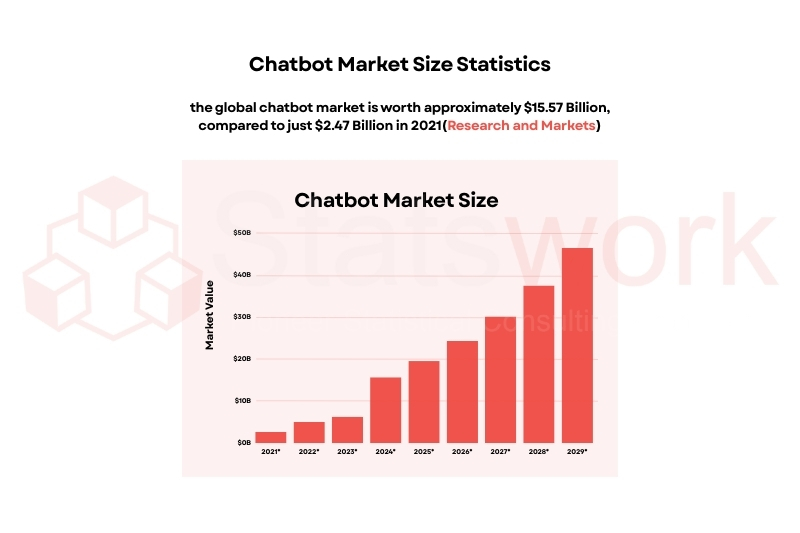
Figure 1: shows the growth of the global chatbot market, projected to reach approximately $15.57 billion by 2029, up from $2.47 billion in 2021.
Example: A systematic review and meta-analysis of AI-enhanced tools (e.g., chatbots or recommendation engines) can be valuable resources for B2B brands seeking to evidence the potential returns on investment in AI technology and deepen their authority in the field.
Challenge of Data Complexity: Raw data from multiple marketing channels (e.g., email, social, SEO) can be complicated and fragmented.
A meta-analysis affords an advantage over datasets: Meta-analysis applied with AI-driven marketing does the ability to uncover enduring trends and identify patterns in data that weren’t apparent within a market campaign.[5]
Figure 2 shows how combining customer data from different regions or demographics enhances AI model predictions.
AI Model Bias: When AI models are trained on partial or biased data, predictions can be inaccurate.
Benefits of Meta-Analysis: Meta-analysis services gather and assemble data from many sources, thereby minimizing bias and determining that I’m AI model is trained on diverse, representative datasets.[3]
Example – a meta-analysis could combine customer data from several regions or demographics, increasing an AI model’s ability to effectively predict customer preferences around the world.
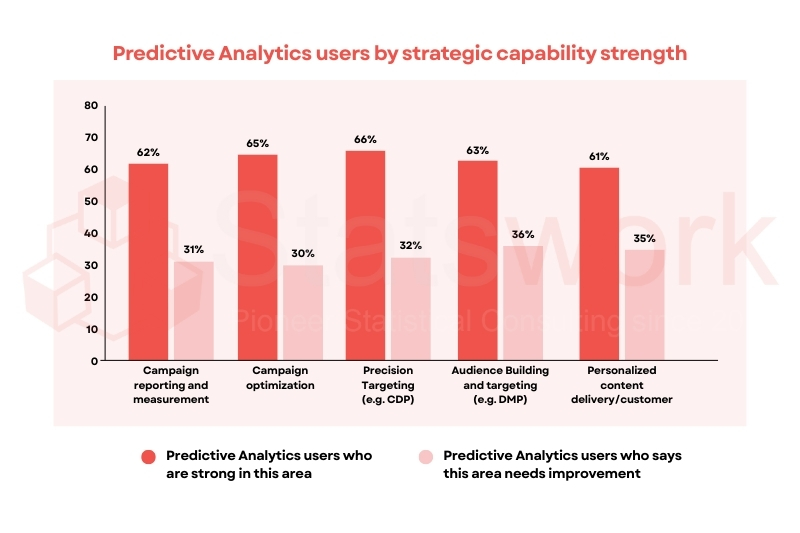
Figure 3: Customer sentiment analysis by issue, priority, and channel, showing response distribution.

Predictive Capability: The ability to leverage AI for predictive capabilities relies solely on the quantity and quality of data available for training.
Value of Meta-Analysis: A meta-analysis of B2B businesses would improve AI predictive capability because it combines multiple data points from different sources which improves accuracy and reliability of the models.[2]
Scenario | AI Prediction | Impact |
Sales Forecasting | Predict sales demand | +25% accuracy |
Inventory Management | Optimize stock levels | -30% stockouts |
Resource Allocation | Efficient resource use | +20% utilization |
Heavy Expenses for Primary Research: New research or experiments can be an expensive and lengthy endeavour.
Meta-Analysis Benefit: A meta-analysis service could be a much easier and less expensive route, using other studies and saturated data sets to extract intelligence.[4]
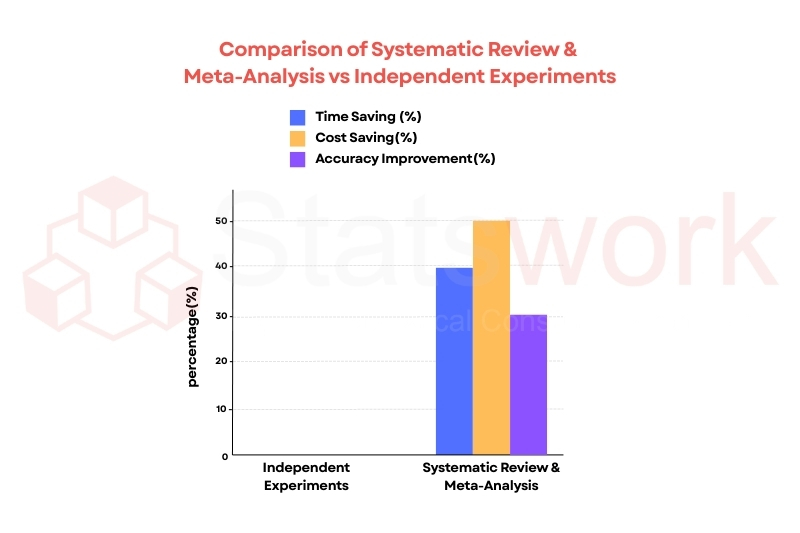
Figure 4: Comparison of Systematic Review & Meta-Analysis vs Independent Experiments in time, cost, and accuracy.
Advantages of Meta-Analysis for B2B Brands
Benefit | Impact on B2B Brands |
Informed Decisions | Brings together multiple data sources for insights into customer behaviour and market trends. |
Validating AI solutions | Provides evidence of statistical impact on the effectiveness of AI solution impacts, which increases buyer confidence in investing in technology. |
Identify Patterns and Trends | Identify emerging trends over time between sectors, which allows them to maintain a sustainable competitive advantage over competitors. |
Bais Reduction | Aggregation of measures sources into one data source to provide more balanced AI models which will reduce technologist bias. |
Risk Reduction in Predictive Accuracy | Improving the accuracy of predictive AI models synthesizing multiple data sources. |
Lower Cost Research | Utilization of preexisting studies and datasets to save time and money over performing primary data collection yourself. |
Meta-analysis services are changing the way B2B brands use AI and data to remain competitive in fast-paced business environments. A systematic review and synthesis of data from multiple sources enables B2B businesses to generate real insights, reduce bias and improve the precision in data-driven models & algorithms. Regardless of the application, whether it’s validating AI solutions, discovering underlining trends or improving predictive capabilities, meta-analysis for B2B brands is a must-use service for making more prudent and data flowed decisions.[5]
In an AI laden future, brands who utilize AI-driven meta-analysis will have a distinct edge in a more thorough understanding of customer behaviours, improving marketing efficiency or maximizing returns on their investment in AI technologies.
Harness the full potential of your data to drive smarter decisions, enhance AI accuracy, and stay ahead of the competition. Contact Statswork today to start optimizing your B2B strategy with expert meta-analysis.



WhatsApp us