
Data Synthesis in Meta-Analysis: A Comprehensive Overview of Incorporating Research Findings
- Home
- Insights
- Article
- Data Synthesis in Meta-Analysis: A Comprehensive Overview of Incorporating Research
AI and Machine Learning Success
News & Trends
Recommended Reads

Data Collection
As the data collection methods have extreme influence over the validity of the research outcomes, it is considered as the crucial aspect of the studies
Data Synthesis in Meta-Analysis: A Comprehensive Overview of Incorporating Research Findings
- 1. Introduction
- 2. DeepHealth’s Diagnostic Suite™: Revolutionizing Radiology Workflows
- 3. Key Features
- 4. AI Impact on National Screening Programs
- 5. SmartMammo™: Enhancing Breast Cancer Screening
- 6. DeepHealth AI Use Cases Across Specialties
- 7. Strategic Collaborations and Ecosystem Expansion
- 8. Impact and Adoption of DeepHealth’s AI Solutions
- 9. Conclusion: The Future of Radiology with AI
- 10. References
May 2025 | Source: News-Medical

How to Ensure Annotation Quality in Your AI Training Data
Introduction
Meta-analysis is a research synthesis technique that employs statistical methods to analyze and pool data from multiple independent studies on the same topic. The aim of meta-analysis is to draw a more certain and accurate conclusion than the individual studies can offer independently. By pooling data, we can make a larger pool of data, assess and identify patterns and trends in research, and thus better discover the effect of a treatment.
A key aspect of meta-analysis is data synthesis. Data synthesis refers to integrating and interpreting data from disparate research studies to glean meaning from them. Data synthesis allows researchers to resolve discrepancies in studies, to strengthen the evidence base, and ultimately offer more generalizable conclusions. Whether you are working with systematic reviews, clinical research, or educational research, understanding and using methods of data synthesis is one of the most important aspects of producing high-quality meta-analytic research.
In this comprehensive guide, we will cover the essentials of data synthesis in meta-analysis, methods of data synthesis, potential challenges, and best practices. It does not matter if you are doing your first meta-analysis or are an experienced researcher; this guide will help you soften the sharp edges of drawing conclusions from independent studies and unite more research together in a meaningful way.
What is Data Synthesis in Meta-Analysis?
Data synthesis is the process of combining and analyzing data from multiple studies in a systematic way. In meta-analysis, it involves two primary objectives:
- Quantifying Effect Sizes: This refers to estimating the magnitude of the relationship or effect observed across different studies.[1]
- Evaluating Heterogeneity: Heterogeneity refers to variations between study results and it can be useful to apply data synthesis methods to assess and determine the nature of these differences.[2]
Why is Data Synthesis Important?
Data synthesis is key to:
- Increasing Statistical Power: Combining multiple studies helps provide a more accurate estimate of the effect size.
- Resolving Conflicting Findings: By synthesizing results, you can reconcile conflicting or inconsistent findings from individual studies.[3]
- Providing Generalizable Conclusions: Combining data from different settings, populations, and study designs enhances the external validity of the findings.[5]
Types of Data Synthesis in Meta-Analysis
In conducting a meta-analysis, there are two major data synthesis methods:
1. Quantitative Data Synthesis
This method focuses on combining numerical results, such as means, standard deviations, and effect sizes, from individual studies. It typically uses statistical models to provide a combined estimate of effect size.
- Fixed-Effect Model: Assumes all studies are measuring the same estimated underlying effect. It’s ideal when studies are homogeneous and share a similar design.
- Random-Effects Model: Assumes that the effect size may vary across studies due to differences in study design, populations, or settings.[1]
2. Qualitative Data Synthesis
Often applied in the context of qualitative research, this synthesis method is used when combining findings from descriptive or thematic studies (e.g., case studies, interviews).
Steps in Data Synthesis for Meta-Analysis
The data synthesis process involves several critical steps. These steps ensure that the integration of study results is rigorous and systematic:
- Literature Search and Study Selection
Start by conducting a thorough literature search to identify studies that meet predefined inclusion and exclusion criteria. It’s important to ensure that only studies with comparable methodologies and outcomes are included. - Data Extraction
Key data points are extracted from each study, including sample size, effect sizes, means, standard deviations, confidence intervals, and other relevant statistics. Attention to detail is extremely important at this step of the meta-analysis process. - Assessing Study Quality and Risk of Bias
Evaluating the quality of each study is crucial to ensure that results are not biased or misleading. Tools such as the Cochrane Risk of Bias tool can help to assess the validity of every study used in the meta-analysis.[2] - Data Combination and Statistical Analysis
The next step is to combine the extracted data using statistical methods like the fixed-effect or random-effects models mentioned earlier. Statistical tests such as Q-test (heterogeneity test) and I² statistic can help determine the variability across studies.[1] - Interpretation and Reporting
Once the data has been synthesized, the results are interpreted and presented in a manner that reflects the overall findings. This could include visual tools like forest plots, funnel plots, and tables to display the results clearly.[5]
Table: Comparison of Fixed-Effect vs. Random-Effects Models
| Feature | Fixed-Effect Model | Random-Effects Model |
|---|---|---|
| Assumption | All studies estimate the same underlying effect | Effect sizes differ across studies |
| Variation Consideration | Only within-study variation considered | Both within-study and between-study variation considered |
| Effect Size | Constant across studies | Varies across studies |
| Model Fit | Ideal for homogeneous studies | Ideal for heterogeneous studies |
| Heterogeneity Testing | Not applicable | Applies tests for variability between studies |
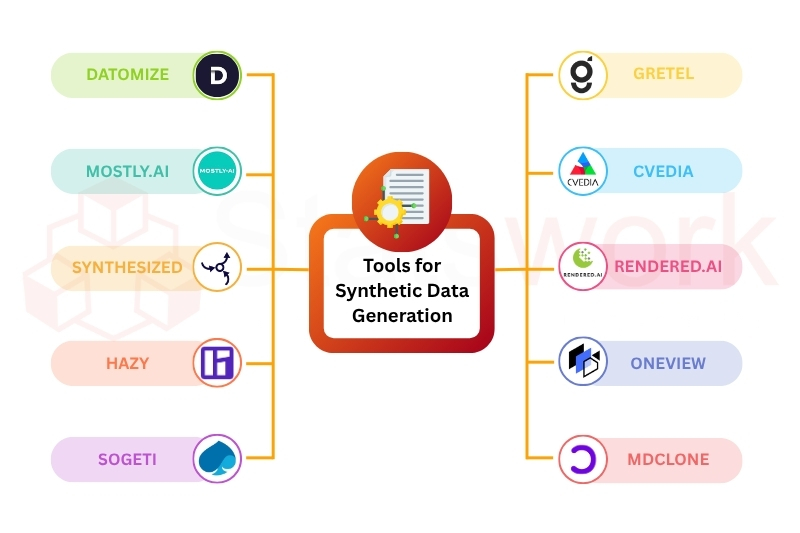
Synthetic data generation tools
Challenges in Data Synthesis for Meta-Analysis
While data synthesis enhances the accuracy of meta-analysis, it also comes with challenges:
- Publication Bias: Published studies often show positive results, which can distort overall conclusions. Funnel plots and other techniques that help assess publication bias.[1]
- Heterogeneity: Variations in study design, sample populations, and measurement methods can make it challenging to combine results effectively. Researchers most commonly utilize random-effects models to account for heterogeneity.[2]
- Inconsistent Data: Different studies may report results in different formats or with varying methodologies, requiring thoughtful integration.[5]
Recent Advances and References in Meta-Analysis Data Synthesis
Recent advances in meta-analysis data synthesis focus on improving statistical methods and handling complex data structures:
- Bayesian Meta-Analysis: This approach uses Bayesian inference to estimate the distribution of effect sizes, providing a more flexible method for synthesizing data from diverse sources.[5]
- Network Meta-Analysis: This method allows the comparison of multiple treatments or interventions even if some treatments haven’t been directly compared in a study, offering a more comprehensive view of available options.[4]

Conclusion
The synthesis of data is the most crucial aspect of a meta-analysis. All the co-authors will be involved in the process of synthesizing evidence across studies, with the same focus, increasing statistical power, and specifying the research questions in a broad way. In either case of quantitative or qualitative synthesis, the methods that have been discussed here will facilitate suitable procedures to combine and analyse data so you can provide credible and meaningful conclusions.
If you are interested in expert help to conduct a thorough and quality meta-analysis, StatsWork provides professional data synthesis and analysis services. Our experienced Statisticians will work with you through the process to ensure your meta-analysis is sound, trustworthy and publication acceptable.
Contact StatsWork today and begin your journey toward more valuable data synthesis in your meta-analysis!

References
- Borenstein, M., Hedges, L. V., Higgins, J. P., & Rothstein, H. R. (2020). Introduction to meta-analysis (2nd ed.). John Wiley & Sons. https://books.google.co.in/books?
- Borenstein, M., Hedges, L. V., & Rothstein, H. R. (2018). Introduction to meta-analysis. NCBI, PMC5733388. https://pmc.ncbi.nlm.nih.
- Platts, M., & Curtis, E. (2018). Meta-analysis: The key to understanding evidence in health care. Fetal and Neonatal Edition, 104(1), F8. https://fn.bmj.com/content
- Bock, M., & Kowalczewski, M. (2018). Meta-analysis: The role of its methodology in research and decision-making. MDPI, 4(3), 34. https://www.mdpi.com
- Zhang, X., & Wang, Y. (2023). Meta-analysis and its application in medicine. Springer, 3(1). https://link.springer.com/article



