
Data-Driven Business Insights: Applying Meta-Analysis for Enhanced Strategy
- Home
- Insights
- Article
- Data-Driven Business Insights: Applying Meta-Analysis for Enhanced Strategy
AI and Machine Learning Success
News & Trends
Recommended Reads
Data Collection
As the data collection methods have extreme influence over the validity of the research outcomes, it is considered as the crucial aspect of the studies
Data-Driven Business Insights: Applying Meta-Analysis for Enhanced Strategy
- 1. Introduction
- 2. DeepHealth’s Diagnostic Suite™: Revolutionizing Radiology Workflows
- 3. Key Features
- 4. AI Impact on National Screening Programs
- 5. SmartMammo™: Enhancing Breast Cancer Screening
- 6. DeepHealth AI Use Cases Across Specialties
- 7. Strategic Collaborations and Ecosystem Expansion
- 8. Impact and Adoption of DeepHealth’s AI Solutions
- 9. Conclusion: The Future of Radiology with AI
- 10. References
May 2025 | Source: News-Medical

How to Ensure Annotation Quality in Your AI Training Data
Introduction
Today’s data-driven, fast-paced business environment demands data to make effective decisions—this proffers a challenge (entrepreneurs capture lots of data, and the analysis and synthesis of data is difficult). In this context, meta-analysis is useful. Meta-analysis is a statistical method that combines data across numerous studies, allowing researchers to identify trends, other forms of insights, and patterns that might not be easy to detect through individual studies.
Meta-analysis for businesses enables leaders to tap into valuable actions and insights from mass data sources and create better strategies, improve resource allocation, and build competitive advantage. This article discusses how businesses can harness meta-analysis in helping them create actionable insights, enhance the quality of their strategies, and create sustainable growth.
What is Meta-Analysis and Why Does It Matter?
Meta-analysis is a technique used to combine results from multiple studies on the same topic in order to provide a more accurate and reliable estimate of an effect. It is commonly used in fields such as healthcare and social sciences, but its relevance to business analytics is growing rapidly.[1]
In the context of business, meta-analysis helps organizations sift through diverse data sources—whether from market research, consumer behaviour studies, or financial reports—and extract meaningful conclusions. This approach offers several benefits:
- Increased Statistical Power: Meta-analysis synthesizes data from multiple studies, providing a superior sample size and allowing reliable outcomes.
- Identification of Trends: Aggregating data from various sources allows businesses to spot long-term trends that may not be visible in smaller datasets.
- Improved Decision-Making: Meta-analysis removes biases and improves the generalizability of findings, helping business leaders make decisions based on a more holistic view of data.[2]
Key Benefits of Meta-Analysis in Business Strategy
1. Better Decision-Making
By integrating various data points and studies, meta-analysis allows businesses to create a more comprehensive picture of their market, consumers, and competitors. Overall, this enables more data-driven and impactful decisions.
2. Risk Reduction
Meta-analysis helps in identifying potential risks by aggregating historical data. This is crucial for making strategic moves that are not only profitable but also sustainable.
3.Targeted Marketing
Meta-analysis can be used to examine consumer behaviour across different demographics and regions. This helps businesses tailor their marketing strategies to specific target audiences, increasing the return on investment (ROI).
4. Forecasting Future Trends
With enough data, meta-analysis can be used to predict future trends in the market, product performance, and consumer needs. This foresight can give businesses a competitive edge by enabling them to act before their competitors.
5. Enhanced Resource Allocation
Organizations can apply meta-analysis insights to better allocate resources. By understanding where the greatest impact can be made, businesses can allocate budgets and manpower to high-priority areas, improving overall efficiency.[3]
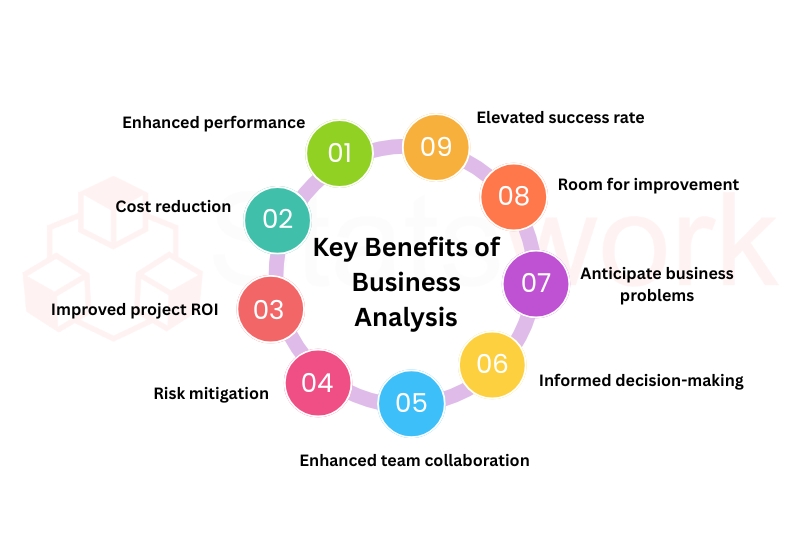
Table: Benefits of Meta-Analysis in Business
| Benefit | Description |
|---|---|
| Better Decision-Making | Enhances the reliability of decision-making based on a broader view of the information. |
| Risk Reduction | Discovers possible risks sooner by combining historical data. |
| Targeted Marketing | Aids in discovering consumer buying behaviours for consumer-focused marketing strategies. |
| Forecasting Trends | Predicts future market and consumer behavior trends based on data patterns. |
| Enhanced Resource Allocation | Improves resource efficiency by pinpointing high-impact areas. |
How to Implement Meta-Analysis in Business
1. Collect Relevant Data
The first step in any meta-analysis is to gather data from various sources. This could include internal data (sales, website analytics) and external data (industry reports, consumer surveys). The more comprehensive the data set, the more reliable the results will be.
2. Standardize Data
Meta-analysis’ effectiveness is dependent on the data being pool-able. This means ensuring that the variables being analyzed are comparable across different studies or datasets.
3. Statistical Analysis
Statistical software tools such as R, Python, or specialized meta-analysis tools (like RevMan or Comprehensive Meta-Analysis) are essential to conduct the analysis. These tools help aggregate the data, perform statistical tests, and identify trends.[4]
4. Interpret Findings
The result of the meta-analysis needs to be interpreted in the context of the business climate. Business leaders must evaluate the findings in relation to their goals and strategy.
5. Apply Insights
The final step is to translate insights into actionable business strategies. For instance, if a meta-analysis reveals that a certain consumer group responds better to specific marketing strategies, companies can adapt their campaigns accordingly.
Real-World Examples of Meta-Analysis in Business
1. Customer Segmentation
A leading e-commerce company applied meta-analysis to study consumer buying behaviour in different geographical regions. The company identified key purchasing patterns and tailored their marketing campaigns to specific demographic groups, resulting in a 15% increase in conversion rates. [5]
2. Supply Chain Optimization
A meta-analysis was undertaken by a multinational logistics company, while aggregating its historical performance data on supply chain data. The analysis highlighted bottlenecks in their distribution network, leading to process improvements and a 10% reduction in operational costs.
3. Product Development
A technology company used meta-analysis to aggregate consumer feedback from product reviews, surveys, and focus groups. This helped the company improve its product features, leading to higher customer satisfaction and a 20% increase in sales.[6]
Challenges and Limitations of Meta-Analysis in Business
While meta-analysis offers numerous benefits, there are challenges to consider:
- Data Quality: The reliability of meta-analysis depends on the quality of the data being used. Poor or inconsistent data can lead to misleading conclusions.
- Data Availability: In some industries, sufficient data may not be readily available for meta-analysis, especially if the company lacks comprehensive historical records.
- Complexity: Conducting meta-analysis requires statistical expertise, which can be a barrier for businesses without in-house data scientists or analysts.

Conclusion
The meta-analysis is a very powerful approach to use large data sets to find patterns, reduce risk, and make better tactical decision making. While there are certainly challenges associated with meta-analysis, the benefits far outweigh the challenges, especially when the meta-analysis is part of an overall data-driven organization. Using meta-analysis as a movement as an organization situates you using data to excel within a competitive environment.
Unlock the value of data-driven decision making with Statswork
Are you ready to use meta-analysis in your organization and see better results from your business decisions? If yes, please reach out today. We will make meta-analysis actionable and valuable for your organization.

References
- SAGE Open. (2013). Meta-analysis in business research. SAGE Open, 3(3), 2158244013490704. https://doi.org/10.1177/
- Dastin, J. (2020, November 17). How to make decisions with data. Harvard Business Review. https://hbr.org/2020/11/
- Borenstein, M., Hedges, L. V., Higgins, J. P., & Rothstein, H. R. (2013). Understanding meta-analysis for business strategy. National Institutes of Health (NIH). https://www.ncbi.nlm.nih.gov
- Zeebaree, S. (2023). Data-driven decision making for e-business success: A review. ResearchGate. https://www.researchgate.net
- Kalinda, C., Qambayot, M. A., Ishimwe, (2024). Leveraging multisectoral approach to understand the determinants of childhood stunting in Rwanda: A systematic review and meta-analysis. Systematic Reviews, 13(16). https://doi.org/10.1186/
- Gopal, S. H., Hagan, J. L., & Pammi, M. (2025). Meta-analysis in clinical research: An overview of the statistics of evidence synthesis available to purchase. Hospital Pediatrics, 15(7), e343–e349. https://doi.org/10.1542/



