

Advanced Algorithm Development for Modelling and Evaluation

State-of-the-art AI algorithms for decision making
Many organizations today struggle with ineffective and poorly aligned models due to outdated or overly generic algorithms that fail to address specific business needs, lack of model transparency which reduces stakeholder trust, inadequate feature engineering that hampers performance, weak validation processes that lead to unreliable outputs, and a clear disconnect between model predictions and actual business outcomes. These challenges not only affect decision-making but also undermine confidence in data-driven solutions and limit the impact of AI initiatives.
data dictionary mapping service image
At Statswork, we specialize in advanced algorithm development that powers intelligent decision-making, innovation, and automation across diverse industries. Our team designs and implements custom artificial intelligence (AI) and machine learning (ML) algorithms to solve complex analytical challenges, build predictive and classification models, and support the development of diagnostic tools and data-driven products. With strong expertise in real-time algorithm development and coding, we work with a wide range of data types—including image, text, voice, handwriting, and video—and apply our solutions in areas such as data security, processing, wireless communication, multi-objective optimization, and high-dimensional sparse data analysis.

What sets Statswork apart is our integrated, research-driven approach and our deep understanding of both technical modeling and domain-specific needs. We don’t just develop algorithms—we deliver scalable, interpretable, and high-impact solutions that instill confidence and drive smarter decisions.

Our experience spans industries such as healthcare, agriculture, pharmaceuticals, supply chain, cybersecurity, marketing, retail, energy, and academia. Each project is tailored to the client’s specific objectives, ensuring that our solutions align closely with real-world challenges and deliver measurable outcomes. With offices in India and the UK, we have direct access to a highly skilled talent pool of data scientists, engineers, and domain experts.
To ensure meaningful results, we offer end-to-end algorithm development services that combine technical precision with domain relevance. This includes custom model design for predictive analytics, classification, and optimization; rigorous validation to ensure reliability; and advanced feature engineering and model tuning to maximize performance. We also support full deployment, including performance monitoring and maintenance, and provide interpretable, well-documented models to ensure transparency and compliance.
Our Capabilities
We work with organizations to create, develop and evaluate algorithms to inform complex data issues and meet objectives. We support a more accurate model, deeper understanding, and better decision-making

Industry Specific Applications

Our process, supported by experts in the field, ensures that our models are scalable, able to be interpreted, and effective – providing accurate and trusted results and helping to solve real-world problems
Why Statswork?
Our models are customized and interpretable by their very nature and compliant with any industry from healthcare to financial services to drive value.
Talend & Informatica service image

Engaged domain and data science experts (3 expert reviewers per project)

Rapid development cycle allowing scalable algorithm deployment support

SQL & PLSQL Scripts icon image

Transparent, explainable AI per industry standards

Custom Python Mapping Engines icon image

A trusted partner to develop a reliable, performant model for every industry

Setting Up a Goal
GR data preparation guidelines creation production evaluation audit trail

1. Defining Use Cases and the Business Process Flow

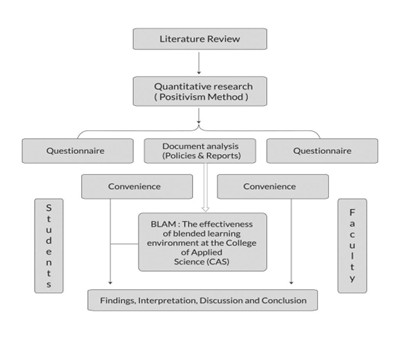
Start by clearly identifying what your business needs. A single application can serve multiple functions, and each function may have several use cases. We work closely with you to define these use cases before establishing detailed business requirements. Our team of developers and domain experts collaborates to map out the complete business process flow—breaking it down into inputs, outputs, and sub-processes, and identifying the sequence, interactions, and decision points that shape your operational model.

step 1 image

2. Developing a Data Dictionary & Capturing Existing Data

A well-defined data dictionary is essential for understanding, contextualizing, and translating programming logic into actionable business rules. Once the process flows are documented, our experts create a comprehensive data dictionary that includes all data elements used in the application, along with their business and functional definitions. We then establish reliable data collection mechanisms to ensure completeness and accuracy from the start.

step 2 image

3. Visualizing the Data Pipeline

We help you define and implement the components of a data pipeline by developing business rules, annotations, and metadata categorization. This includes designing the system architecture and conceptual framework to meet your specified requirements. Our approach incorporates relevant certifications, regulatory requirements, and market constraints. We define the methodologies to be used in the software development process and follow best practices aligned with industry standards.

step 3 image

4. Developing, Validating & Deploying Data Models

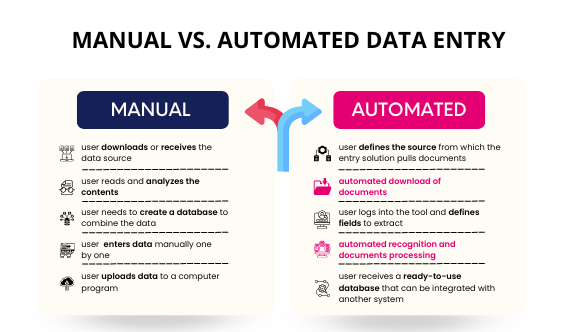
Machine learning models can quantify the conceptual similarity of fields irrespective of labels (e.g. Patient_ID and PID), encouraging greater precision comparing datasets with unrelated labelling conventions.

step 4 image

5. Delivery & Ongoing Support

The processed data will be delivered to you according to the agreed timescales and we will continue to support you in your efforts to get value from it (and therefore your AI & ML solutions).

step 5 image

6. Audit Trail

Maintaining a detailed audit trail to ensure traceability and compliance throughout the data processing lifecycle.

step 6 image
Human-in-the-Loop for Quality Control

All data dictionary mappings at Statswork undergo multiple stages of validation, with a human-in-the-loop (HITL) for review.

We can do more

Build advanced algorithm that drive smartwe faster ai & ml solutions
Success Stories
Insights - Must Read Articles
Frequently Asked Questions

Advanced algorithm development is about the creation of algorithms designed for specific tasks such as prediction, classification and optimization.It is important because existing or off-the-shelf models tend to be generic and not necessarily capable of resolving the problem of interest in the required domain. Statswork builds each algorithm according to specific data, goals, and requirements around regulation, leading to an algorithm that produces results which are accurate, reliable, and interpretable in a way that ensures business impact could be measured.

Industries like healthcare, finance, energy, retail, and telecommunications really get a benefit from this. These industries create tremendous amounts of data and they are dependent upon intelligent and automated aggregation, prediction, and risk assessment. Statswork builds these algorithms to each industry's specifications whatever that may be; predictive diagnostics in healthcare, credit score assessments in finance, churn modeling in telecommunications; making the decision making valuable and accurate in real-time yields insights that lead to competitive advantage.

Statswork operates under a structured development lifecycle that comprises data pre-processing, feature engineering, cross-validation, and model tuning. Each model is vetted by domain experts, and the performance is evaluated consistently with industry standard metrics. We conduct human-in-the-loop checks to facilitate the process of being sure that the models are technically accurate, but also contextually valuable, making our solutions reliable to deploy in compounded, high-stakes settings.

  • Merges advanced data science with domain deep expertise
  • Develops credible, scalable, congruent models
  • Engages with expert reviewers on every project to ensure accuracy
  • Uses a transparent and iterative development process
  • Emphasizes explainability and compliance (e.g., healthcare, finance)

Correct, models are designed to be compatible with:

  • On-premises systems
  • Cloud-native infrastructure
  • Hybrid configurations

Integration options include:

  • APIs
  • SDKs
  • Direct embedding in analytics platforms

We provide:

  • Full deployment
  • Post-deployment monitoring and tuning
  • Continual model tuning for performance.

Statswork follows strict compliance standards (e.g., HIPAA, GDPR, SOC2) during the development of algorithms. The data we use is handled within, and signed under, NDAs, and retained securely and processed within the governance compliant frameworks. We also build model transparency and documentation into our development process—making sure that all outputs are auditable, and in accordance with legal and industry-specific regulations.

Need Statistical Consulting
support? Let’s talk.