



How machine learning analytics and metrics could be effectively used in retailing research
June 4, 2021
Analyses for Logistics & Transportation: How Statswork experience enhance L&T operations
June 11, 2021How to Conduct the Efficiency and Productivity Analysis of Logistic Providers’ Services | Logistics Service Providers Performance Analysis
Introduction:
The continuous flow of knowledge, product, and funds between vendors, producers, sellers, retailers, and consumers is one of the supply chain’s dynamic characteristics. The involvement of vendors or Logistics Service Providers (LSPs), responsible not only for the procurement of raw materials and supplies but also for the delivery of such materials and supplies, contributes significantly to supply chain efficiency and productivity and delivers finished products to the consumer. Outsourcing logistics functions to third-party logistics (3PL) providers allows an organisation to concentrate on its core competencies, optimize operational performance, and maximize profitability. In this article, the core efficiency and productivity of Logistics Service Providers can be discussed with a focus on logistics performance evaluation and operational efficiency analysis.
Logistic Provider’s Services:
An organisation that sells goods and services must find out how to get such products and services delivered efficiently through effective logistics management services. Suppose the goods and services are delivered and sold online. In that case, they must also decide how the products can be transported from one location to another using specific shipping and logistics services. There are three different categories of logistics services that are widely used in modern supply chain management. The logistics industry is large and diverse, with various resources that affect how goods are shipped from the manufacturer to specific recipients. Let’s surf into the primary services of Logistic Service providers and understand their role in logistics productivity analysis.
Warehousing Services:
Until being delivered, the commodity is either stored in a warehouse or transported in a series of warehouses as part of structured warehouse management and storage solutions. Some businesses choose to use their own facilities, while some collaborate with third-party logistics service providers (3PL) for advanced warehousing services. They usually receive, ship, and store items for their clients as part of integrated inventory management and distribution services. The amount of storage you need will decide the dynamic space your goods require, as well as the time aspects of your need for space, the ease at which your products can be accessed, and several other factors affecting logistics efficiency.
Freight Services:
Freight transportation is commonly used to transport large products and bulk orders under structured freight management services. It covers various vehicles such as aircraft, trains, cargo ships, trucks, among many others, forming a key component of transportation logistics analysis. Drayage services allow your order to be shipped from ports to specific warehouses for storage as part of freight services and port logistics coordination. The distribution provider’s responsibility is to ensure the supplies are shipped on schedule, regardless of the situation or the company’s circumstances. It makes it possible to maintain brand reputation, service quality, and consumer satisfaction while improving logistics operational efficiency.
Courier Services:
One of the company’s most common delivery services is courier shipping under last-mile delivery solutions. UPS, FedEx, and other shipping firms are really common these days in global courier logistics. Courier service is typically used for smaller orders and goods that are particularly delicate and need special handling during distribution. The pace of courier services is higher than that of freight transport because courier services handle smaller shipments rather than huge quantities of goods. Many retailers save delivery services until the last phase, where the merchandise is delivered straight from the factory to the expected customers, enhancing customer service efficiency and logistics responsiveness.
Analysis Of Efficiency And Productivity In LPS:
The value of City Logistics (CL) as a holistic solution aimed at reducing the detrimental consequences of delivery operations without penalising social, cultural, or economic problems has been highlighted due to increased urbanisation and recognition of freight transportation impacts. Logistics service providers (LSPs) play a critical role in this context, particularly in sustainable logistics and green supply chain management. [1]
There are several patterns hidden in Logistics Service Providers to scrutinise the productivity analysis and efficiency measurement of logistics operations:
Rather than network and experiment, focus and adhere. This trend focuses on the strategic perspective of greening LSP practices and a competitive understanding of the logistics market’s growth, improving logistics performance metrics and sustainable operational models.
Internal emphasis on “spread” as opposed to broad interaction to reach individual consumers. Customer focus and the transition and exchange of green skills and competences are also part of this trend, contributing to enhanced service quality performance indicators.
Top-down passiveness vs. bottom-up technological exploration, the final trend is concerned with how green practices are handled and regulated within the business and resource investment, directly impacting logistics productivity measurement and operational benchmarking.
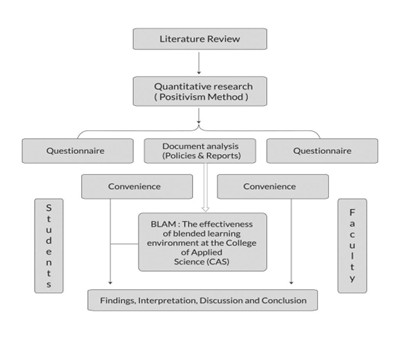
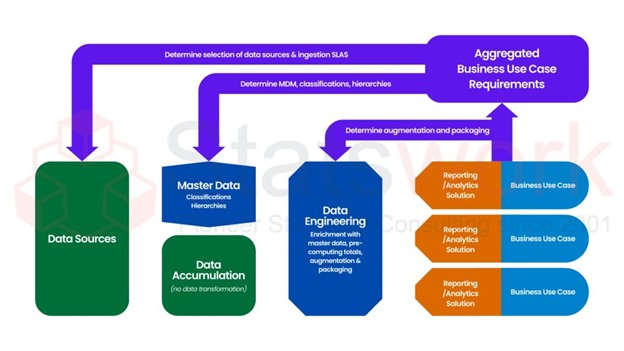
Figure: General framework for Logistic Service Providers

Table:
Transportation, Storage and Communication Industries Economic Presentation of 2016 and 2017 [3]
| Industry | Gross Value for 2016 (in Million Pesos) | Gross Value for 2017 (in Million Pesos) | Growth Rate (%) |
| 1.Transport and storage | 129,918 | 137,219 | 5.6% |
| Land | 72,663 | 76,045 | 4.7% |
| Water | 5,985 | 5,952 | -0.6% |
| Air | 20,564 | 21,316 | 3.7% |
| Storage and service incidental to transport | 30,706 | 33,907 | 10.4% |
| 2.Communication | 10,904 | 112,233 | 6.0% |
| Gross Value Added | 235,822 | 249,452 | 5.8% |
Conclusion:
The various trends can be clarified by the corporations’ efforts to maximise productivity and improve logistics operational performance, although they have sometimes preferred contradictory methods of behaving and reasoning.
The sale of retail and household goods makes extensive use of 3PL facilities and third-party logistics services. These services enable businesses to respond quickly to customer demand while also lowering supply-chain delivery costs and improving logistics efficiency metrics. Warehouse and logistics management is a difficult job that ensures the timely supply of high-quality products to consumers while maintaining strong supply chain performance analysis.
Future Scope:
The focus of future studies will be on evaluations of complex markets and other geographic areas using structured logistics efficiency assessment models. In this way, the key aspects of each market under review can be identified, and comparisons between other markets can be made using logistics benchmarking and productivity analysis frameworks.
References:
- De Marco, Alberto, et al. “Factor influencing logistics service providersefficiency’in urban distribution systems.” Transportation Research Procedia 3 (2014): 499-507.
- Isaksson, Karin, and Maria Huge‐Brodin. “Understanding efficiencies behind logistics service providers’ green offerings.” Management research review (2013).
- German, Josephine D., Maria Katrina T. Asuncion, and Louie E. Pacheco. “Increasing Productivity and Efficiency for Third Party Logistics Service.” Proceedings of the International Conference on Industrial Engineering and Operations Management. 2019.