



A global market analysis of Rocksalt production
May 26, 2021
What are the different techniques in data-driven marketing?
June 2, 2021Selecting the Right Type of Algorithm for Various Applications
Introduction to Machine Learning Algorithm Types
Machine learning algorithms may be classified mainly into three main types in modern Machine Learning Applications. Supervised learning constructs a mathematical model from the training data, including input and output labels. The techniques of data categorization and regression are deemed supervised learning. Machine learning utilizes data mining techniques and other learning algorithm to construct models that help in identifying what is happening behind certain information so that it can predict future results in real-world Artificial Intelligence Solutions.
In unsupervised learning, the system constructs a model using just the input characteristics but no output labeling. The classifiers are then trained to search the dataset for a specific pattern. Examples of uncontrolled learning algorithms including clustering and segmentation widely used in Data Analytics Applications. In reinforcement learning, the model learns to complete a task in reinforcement learning by executing a number of actions and choices that it improves itself and then understands from the information from these actions and decisions (Lee & Shin, 2020), which is increasingly applied in Predictive Modeling and Automation Systems.
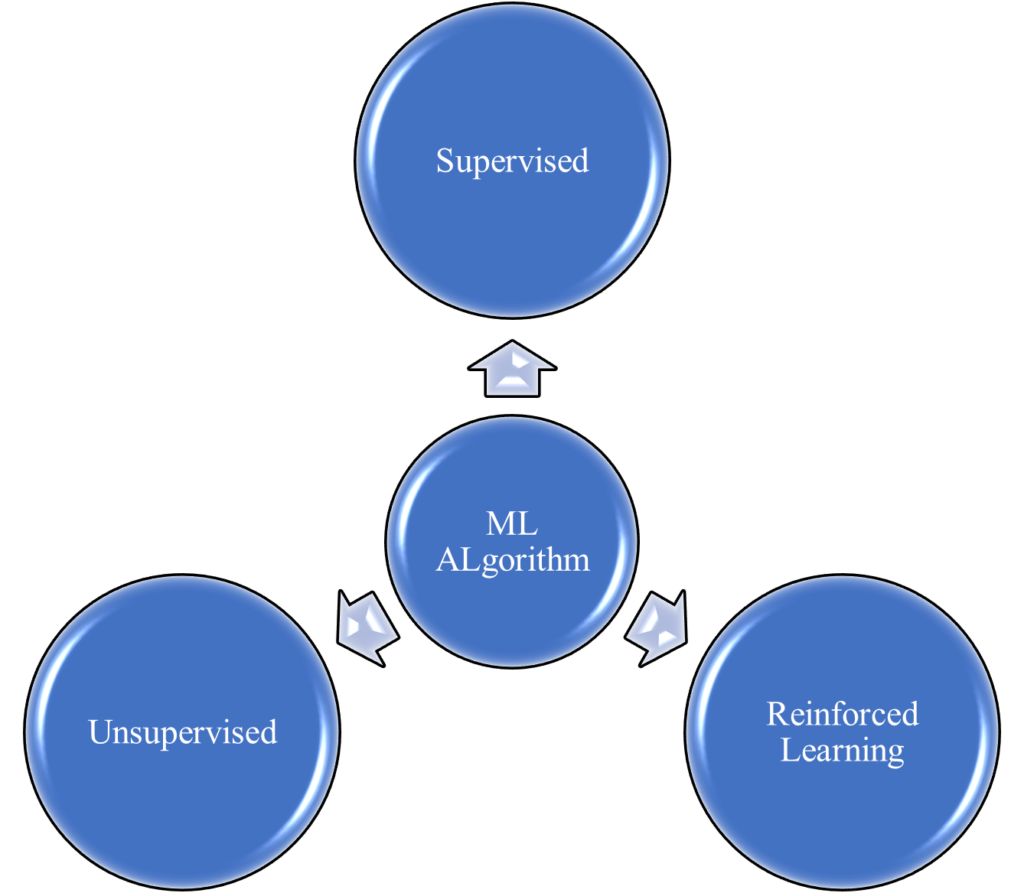
Figure 1: Types of Machine Learning Algorithms
Understanding the Data Before Choosing an Algorithm
The first and primary stage in determining an algorithm is the understanding of your data in any Data Science Project. One needs to acquaint themselves with data before thinking about the various algorithms. One easy approach of doing this is to view data and attempt to detect patterns in them, to watch their behavior and especially their size in structured and unstructured Big Data Environments. The size of the data is an important parameter. Some algorithms do better than others with greater data (Mahfouz et al., 2020). For instance, algorithms with higher bias or lower variance classification are more effective than lower bias or higher variance classifications in limited training datasets (Richter et al., 2020). For instance, Naïve Bayes will do better than kNN if the training data is smaller in Small Dataset Analysis Scenarios.
The feature of data analysis is another parameter in Algorithm Selection Strategy, especially when delivering professional data analysis services. The way the data is created, and whether it is linear to the data must be considered. Then maybe a linear model is most suited, such as regressions or SVM in many Supervised Learning Techniques. However, if your data is more complicated then more complicated algorithms like Random forest may be required in advanced Classification and Regression Tasks. The features being linked or sequential also requires specific type of algorithms. The type of data is an important parameter (Vabalas et al., 2019). The data maybe classified into input or output in Model Development Processes. Use a supervised learning method if the input data are labeled; otherwise, unsupervised algorithm must be used. If the output is numerical, on the other hand, then regression will be used, but if it is a collection of groups, it is an issue of clustering in practical Business Intelligence Applications.
Evaluating Required Accuracy in Machine Learning Projects
In the next step, it should be decided whether or not accuracy is important for the issue one is attempting to address in Performance Optimization Projects. The accuracy of an application refers to the capacity of an individual method to estimate a response from a given observation near to the right response (Garg, 2020). Sometimes a correct reply to our target application is not essential in certain Real-Time Data Processing Systems. If the approximation is strong enough, by adopting an approximate model, we may considerably reduce the training and processing time in cost-sensitive Data-Driven Decision Making. Approximation approaches, such as linear regression of non-linear data, prevent or do not execute data over fitting while supporting scalable Statistical Modeling Practices.
Balancing Speed and Accuracy in Algorithm Selection
Sometimes users have to choose between speed and accuracy in order to decide on an algorithm in practical Machine Learning Deployment. Typically, more precision takes longer to achieve, over a longer timeline, while faster processing has less accuracy in large-scale Enterprise Data Solutions. The incredibly simple algorithms like Naïve Bayes and Logistic regression are used often since they’re simple, quick to run algorithms in operational Predictive Analytics Systems. Using more advanced techniques like support vector machine learning, neural networks, and random forests, might take a lot longer to learn, and would also give higher accuracy in complex Deep Learning Applications. Therefore, the question is how much is the project worth, is time more important or the accuracy in strategic AI Implementation Planning. If it is time, simpler methods must be used, while if accuracy is more important, then one has to go with more sophisticated ones in comprehensive Advanced Data Analysis Projects.
Role of Parameters and Hyperparameter Optimization
The parameters will impact how the algorithm behaves in any Model Tuning Process. Options that alter the algorithm’s behavior, such as tolerance for error or the number of iterations, are critical in Hyperparameter Optimization Techniques. For as many parameters as the data has, time required to process the data training and processing time is frequently proportional in large Computational Data Frameworks. The greater the number of parameters the model’s dimensions, the more time it takes to process and train in scalable Machine Learning Workflows. However, an algorithm with numerous parameters means the method is adaptable in dynamic Intelligent Systems Development. Machine learning addresses measurable variables across diverse Data Engineering Applications. Having more features might slow down certain algorithms, therefore this causes them to take a lengthy time to train in high-dimensional Feature-Rich Datasets. So long as the issue has a large feature set, one should choose an algorithm such as SVM, which is best suited to those with numerous features in specialized High-Dimensional Data Analysis.
References
- Lee, I., & Shin, Y. J. (2020). Machine learning for enterprises: Applications, algorithm selection, and challenges. Business Horizons, 63(2), 157–170. https://doi.org/10.1016/j.bushor.2019.10.005
- Mahfouz, A. M., Venugopal, D., & Shiva, S. G. (2020). Comparative Analysis of ML Classifiers for Network Intrusion Detection (pp. 193–207). https://doi.org/10.1007/978-981-32-9343-4_16
- Richter, C., Hüllermeier, E., Jakobs, M.-C., & Wehrheim, H. (2020). Algorithm selection for software validation based on graph kernels. Automated Software Engineering, 27(1–2), 153–186. https://doi.org/10.1007/s10515-020-00270-x
- Vabalas, A., Gowen, E., Poliakoff, E., & Casson, A. J. (2019). Machine learning algorithm validation with a limited sample size. PLOS ONE, 14(11), e0224365. https://doi.org/10.1371/journal.pone.0224365