Today’s scientific research in the domain of life science generates huge quantities of biological data. Thus, it becomes indispensable to interact strategically and accurately in analyzing the data. Bioinformatics experiment design and bioinformatics data analysis ensure the correct conversion of the obtained biological data. Otherwise, it is not possible to attain the correct outcome through the application of computational tools in the absence of proper planning. Various approaches have been discussed in the article to follow while performing experiments.[1]
A strong foundation helps guarantee successful and meaningful outcomes for the analysis to be done in bioinformatics. A thorough planning phase helps guarantee accurate analysis and long-term usability for the designing bioinformatics experiments in an effective bioinformatics study design.
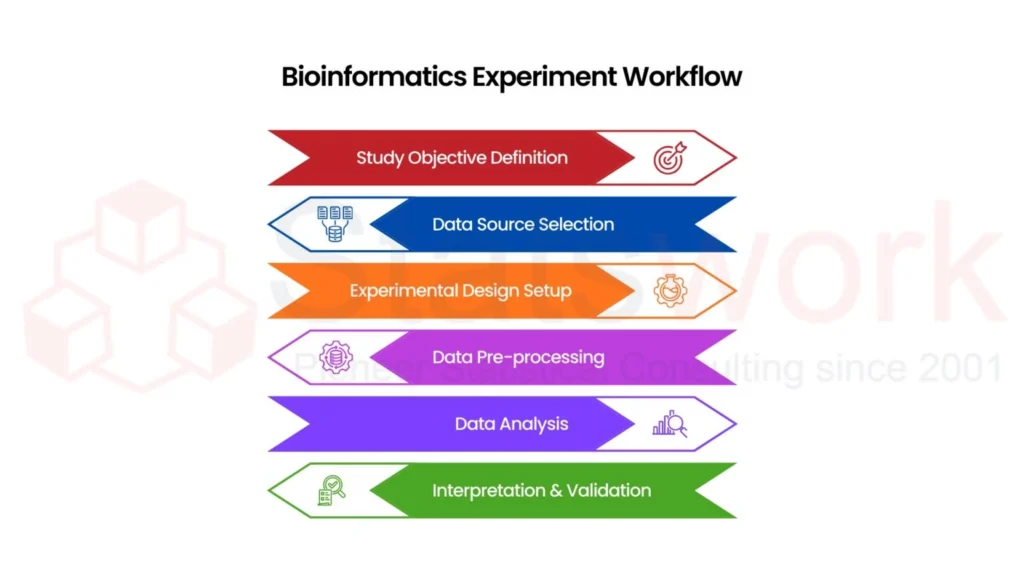
Structured workflows help avoid errors and ensure data consistency by utilizing a standard step-by-step bioinformatics experiment workflow that encompasses every stage of a research study.
Workflow Stage | Description |
Study Objective Definition | Clearly define the biological problem and the outcomes desired |
Data Source Selection | Choosing appropriate public repositories or experimental data sets |
Experimental Design Setup | Plan appropriate controls, replicates, and variables |
Data Preprocessing | Conduct quality assessment, filtering and normalization |
Data Analysis | Apply statistical and computational techniques |
Interpretation & Validation | Validate discovery by employing biological information and measurements |
Thus, these systematised techniques help ensure precise analysis and remain an important prerequisite for the proper designing bioinformatics experiments in academic and industrial institutions.[3]
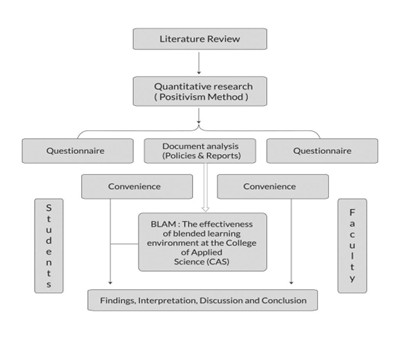
Fig 1 shows the step-by-step workflow of a bioinformatics experiment from study design to interpretation and validation.
Dealing with large-scale data in the context of data analysis in biological data analysis involves proper planning, strong methodologies, as well as structured approaches to derive some useful conclusions in an intellectually honest manner through analysis in computational biology data analysis.
Reliable results depend on consistent best practice use throughout the whole lifecycle of the study. Key best practices are:
Observing best practice for bioinformatics experiment design can make the results credible and even lead to more usable outcomes in the future. Bioinformatics data analysis services can provide important support for complex bioinformatics investigations by focusing on quality outcomes for the benefit of the project’s scientific interpretation team.[5]
Alignment between experimental research and experimental design is critical to achieving acceptable bioinformatics research. Implementation of an effective workflow and scalable approaches to bioinformatics lays down solid foundations that ensure that biodata is converted to bio-knowledge. Bioinformatics is largely becoming the face of contemporary life science, and so investing in effective bioinformatics experiment design and expert approaches to bioanalysis is critical.
Simplify complexity and accelerate discoveries with StatsWork’s Data analysis services.
WhatsApp us