
- Services
- Data Analysis services
- Sample Work
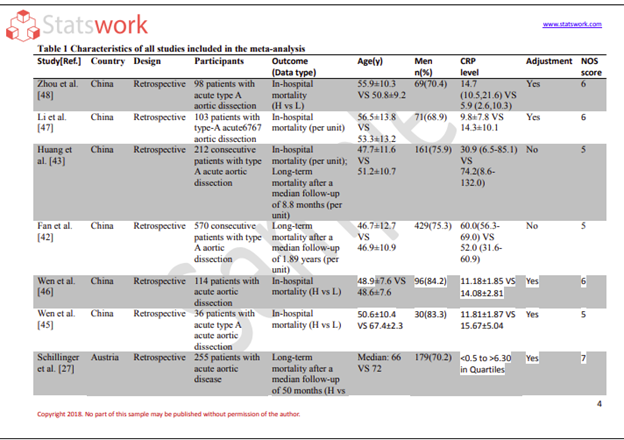
Data Analysis services
- Secondary Qualitative Research Services
- Secondary Quantitative Research Services
- Meta-Analysis Research services
- Sample Work
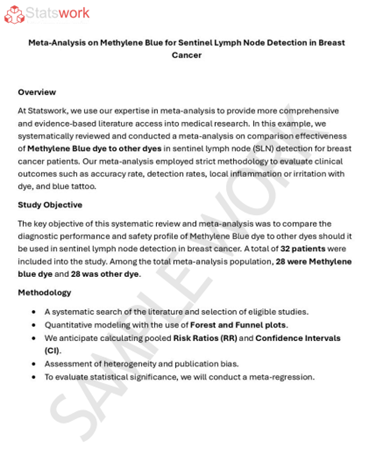
Meta-Analysis Research Services
- Data Collection Services
- Sample Work
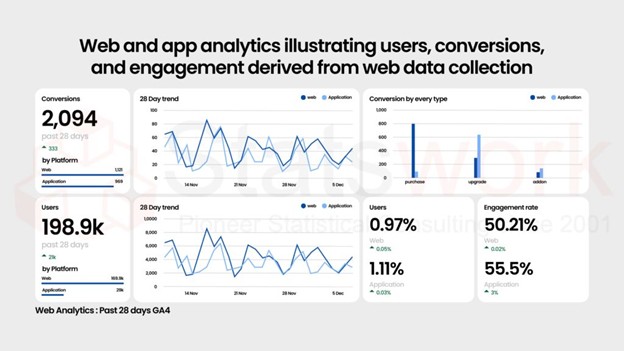
Data Collection Services
- Statistical & Biostatistics services
- Sample Work
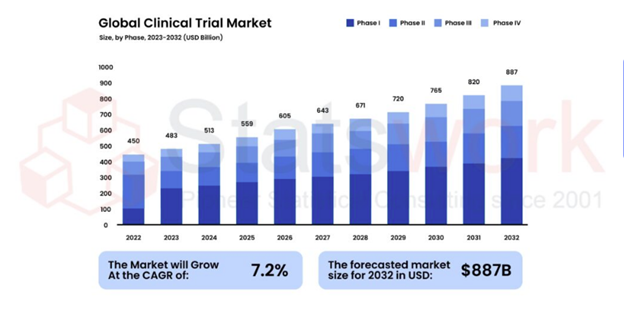
Statistical Programming & Biostatistics services
- Data Management Services
- Sample Work
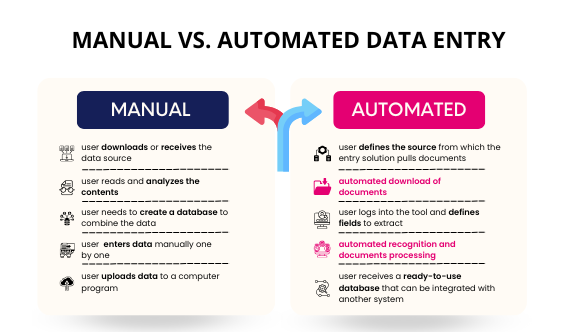
Data Management Services
- Research methodology services
- Sample Work
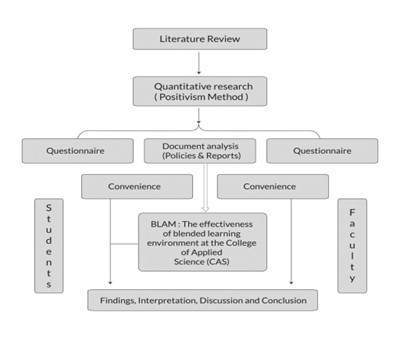
Research methodology services
- Tool Development Services
- Sample Work
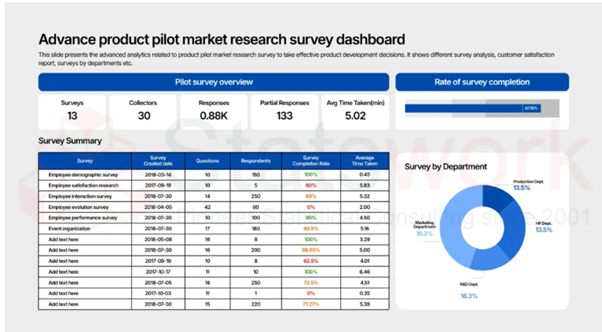
Tool development services
- Statistical Interpretation services
-
Statistical Interpretation services
- Sample Work
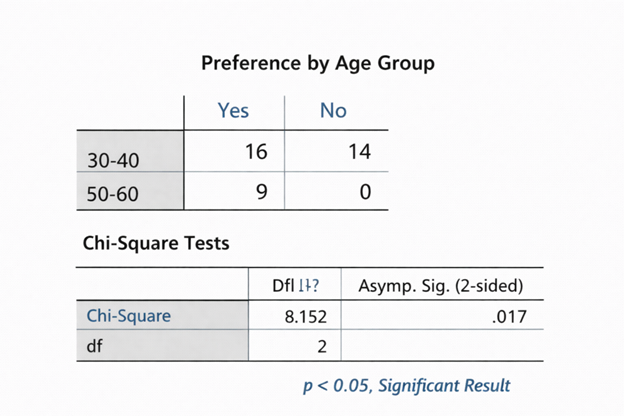
Statistical Interpretation services
-
- Sample Size Calculation Services
-
Sample Size Calculation Services
- Sample Work
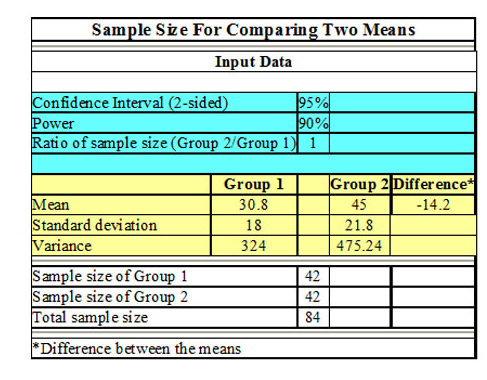
Sample Size Calculation Services
-
- AI & ML Services
-
Artificial Intelligence and Machine Learning Services
- Sample Work
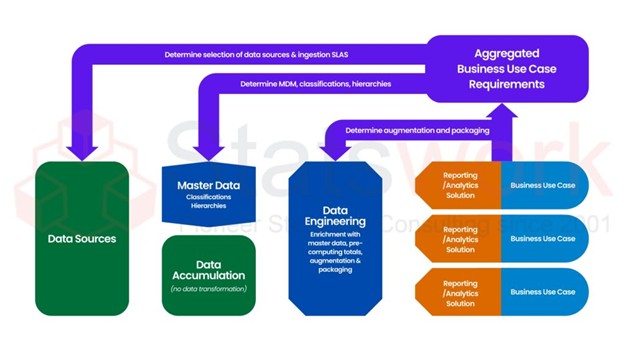
Artificial Intelligence and Machine Learning Services
-
- Meaningful Visualization Services
- Thought Leadership Services
- Report Generation Services
-
Report generation Service
- Sample Work
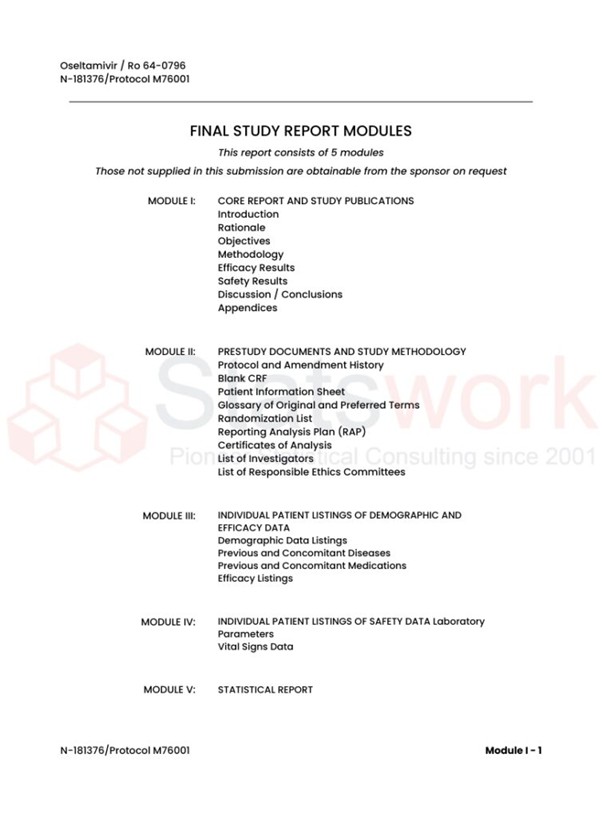
Report generation Services
-
- Data Analysis services
- Industries
- About Us
- Blog
- Insights
- Contact Us
- Services
- Data Analysis services
- Sample Work
Data Analysis services
- Secondary Qualitative Research Services
- Secondary Quantitative Research Services
- Meta-Analysis Research services
- Sample Work
Meta-Analysis Research Services
- Data Collection Services
- Sample Work
Data Collection Services
- Statistical & Biostatistics services
- Sample Work
Statistical Programming & Biostatistics services
- Data Management Services
- Sample Work
Data Management Services
- Research methodology services
- Sample Work
Research methodology services
- Tool Development Services
- Sample Work
Tool development services
- Statistical Interpretation services
-
Statistical Interpretation services
- Sample Work
Statistical Interpretation services
-
- Sample Size Calculation Services
-
Sample Size Calculation Services
- Sample Work
Sample Size Calculation Services
-
- AI & ML Services
-
Artificial Intelligence and Machine Learning Services
- Sample Work
Artificial Intelligence and Machine Learning Services
-
- Meaningful Visualization Services
- Thought Leadership Services
- Report Generation Services
-
Report generation Service
- Sample Work
Report generation Services
-
- Data Analysis services
- Industries
- About Us
- Blog
- Insights
- Contact Us
AI Transcript & Voice Data Collection for Insights, Decision Logs & Project Intelligence
AI Data Collection
News & Trends
Recommended Reads
Contact us
Summary:
Voice data collection and transcription systems use artificial intelligence to capture voice data and transcribe it for businesses into valuable and accurate information for informed decision making, AI modeling, and compliance purposes. The outsourcing of voice data collection will make it possible to transcribe data efficiently while saving on cost and effort.
Introduction
Organizations always face the task of structuring unstructured conversation. That is when the need for automated transcribing and data collecting services of voices arise [1]. Thanks to modern data pipelines and transcription software, organizations can trace all the decisions, customer interactions, and project discussions accurately without any additional efforts on documentation.
Robust voice AI technologies have stopped being a luxury for distributed business-to-business organizations with remote collaboration and multilingual clients. Speech databases with accurate annotation and transcription services have become an integral part of analytical and knowledge management solutions.
Why Enterprises Are Investing in Voice Data Collection
| Business Driver | Operational Impact |
| Faster decision documentation | Documents discussions and decisions quickly for future reference. |
| Reduced administrative burden | Eliminates manual note-taking by generating transcripts in bulk. |
| Accessibility | Provides support for employees and customers who are deaf or have cognitive disabilities. |
| Model accuracy | Supplies clean, labeled data that improves AI model performance. |
| Compliance readiness | Enables structured transcripts to be reviewed for auditing and regulatory compliance. |
Companies that start off their work by using AI audio annotation services tend to have better performance when it comes to speech models because proper annotation of voice recordings is what makes the model understand real-life conversations.
Core Components of a Robust Voice Data Pipeline
A reliable transcription solution comprises several components to achieve transcription accuracy on a large scale:
- Speech-to-text transcribing – the process of converting audio to structured text by applying automatic speech recognition algorithms
- Speech and voice data annotation – adding tags specifying information about the speaker, emotion, and intentions
- Accent and dialect normalization – improving speech recognition performance in a wide variety of linguistic communities [3]
- Transcript verification – human-in-the-loop quality control to correct mistakes not recognized by the machine learning models
- Metadata tagging – collecting information about timestamps, duration, and origin of the audio sample.
AI Training Data Outsourcing: A Strategic Advantage
An internal team gathering AI training data on a large scale requires significant resources. Companies are looking for AI training data services as well as transcription services providers who will take care of the complete life cycle of the voice data set creation process.
| Outsourcing Advantage | Explanation |
| Efficiency | Reduces the cost of building and maintaining an in-house annotation team. |
| Scalability | Handles fluctuating volumes of bulk transcription projects with ease. |
| Expertise | Experienced review teams improve the quality and accuracy of voice data. |
| Quick turnaround | A streamlined processing pipeline enables faster audio labeling and delivery. |
Corporate voice data collection solutions built around these principles allow organizations to focus internal resources on analysis and strategy rather than data preparation.
Supporting Decision Logs & Project Intelligence
Transcripts are more than just records of conversations; they are institutional memory. When used with project management tools, speech recognition information helps in:
- Recording of decisions made in meetings without taking notes
- Searching previous discussions as audit trails and during onboarding
- Detection of unresolved issues through sentiment analysis
- Matching decisions to project milestones
This converts disparate voice files into an ongoing, searchable history of organizational decision-making [3].
Addressing Common Challenges
Despite its advantages, voice data collection still faces practical hurdles:
| Challenges | Solutions |
| Background noise and poor sound quality | Apply audio preprocessing and noise reduction techniques to improve speech recognition accuracy. |
| Accent variations and dialects | Use diverse training datasets that include multiple accents and dialects. |
| Privacy and user consent | Implement a robust governance framework to manage voice recordings securely and ensure compliance. |
Partnering with experienced voice data collection services providers help enterprises navigate these constraints while maintaining data integrity and compliance.
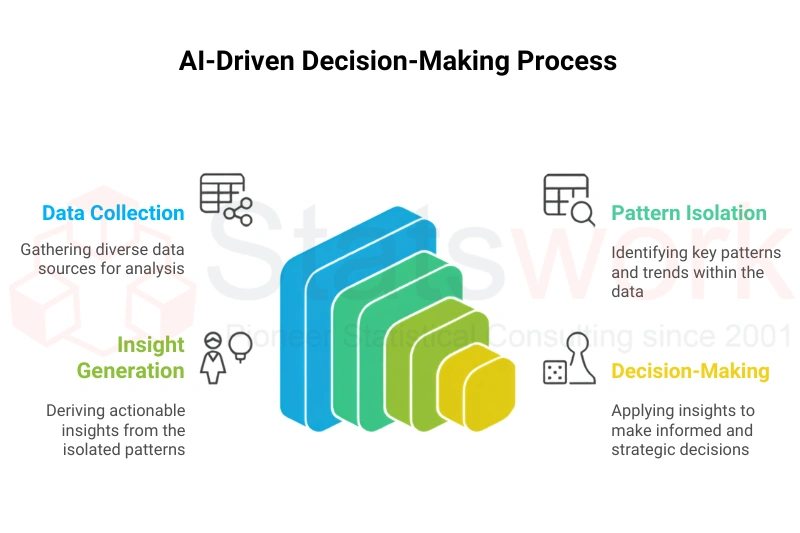
Key Takeaways
Businesses use voice data collection to transcribe their discussions and transform them into insights for AI modeling and compliance purposes. The professional transcription and annotation services help in improving the accuracy and scalability of transcription and multilingual speech recognition. Statswork offers end-to-end voice data collection and transcription solutions.
Conclusion
AI-powered transcription services and voice data pipelines are disrupting the way business houses make their decisions, develop models, and analyze customer engagements. This field requires accuracy in terms of audio transcription [4], rigorous data annotation process, and reliable voice recognition pipeline which should be offered on a large scale.
Statswork is assisting companies in all aspects related to this field – AI audio transcription services, voice data sets generation, and complete AI data annotation services. For more details about Statswork Transcription Services, visit the site now!
Frequently Asked Questions
AI transcription tools are software applications that use artificial intelligence and automatic speech recognition (ASR) to convert spoken language into accurate, searchable text quickly and efficiently.
Speech analytics in BPO is the process of analyzing customer conversations using AI to identify trends, customer sentiment, compliance issues, and opportunities to improve service quality and business performance.
AI data intelligence is the use of artificial intelligence to collect, process, analyze, and interpret data, enabling organizations to generate actionable insights and make informed business decisions.
You can obtain a free transcript of a voice recording by using AI-powered transcription tools that offer free plans or trial versions to automatically convert audio into text.
Some of the best speech analytics tools include Google Cloud Speech-to-Text, Amazon Transcribe, Microsoft Azure Speech Services, NICE Nexidia, Verint Speech Analytics, and CallMiner.
The main types of speech AI include automatic speech recognition (ASR), text-to-speech (TTS), speaker recognition, speech analytics, voice biometrics, and conversational AI used in virtual assistants and chatbots.
References
- Nagasubramanian, D. (2025, April). Harnessing the Potential of Unstructured Data (Audio)-a New Era for Decision-Making. In International Conference of Global Innovations and Solutions(pp. 410-423). Cham: Springer Nature Switzerland. https://link.springer.com/chapter
- Ghadge, S. N. (2024). AI-Powered Information Retrieval in Meeting Records and Transcripts Enhancing Efficiency and User Experience. https://repository.fit.edu/etd/1439/
- Wilcox, L., Brewer, R., & Diaz, F. (2023). AI consent futures: A case study on voice data collection with clinicians. Proceedings of the ACM on Human-Computer Interaction, 7(CSCW2), 1-30. https://dl.acm.org/doi/abs/10.1145/36
- Vial, G., Cameron, A. F., Giannelia, T., & Jiang, J. (2023). Managing artificial intelligence projects: Key insights from an AI consulting firm. Information Systems Journal, 33(3), 669-691. https://onlinelibrary.wiley.com/doi/full