
- Services
- Data Analysis services
- Sample Work
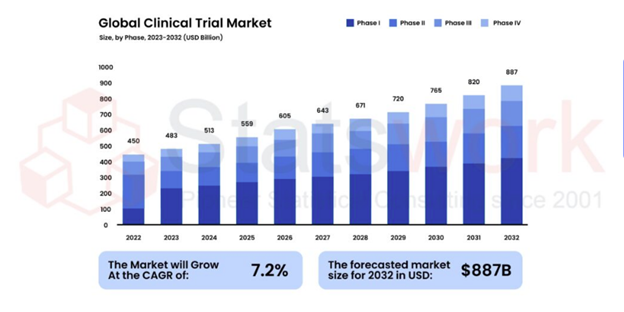
Data Analysis services
- Secondary Qualitative Research Services
- Secondary Quantitative Research Services
- Meta-Analysis Research services
- Sample Work
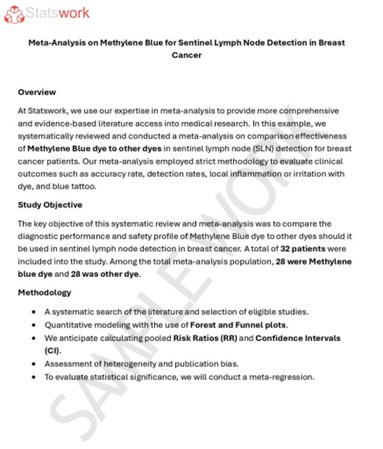
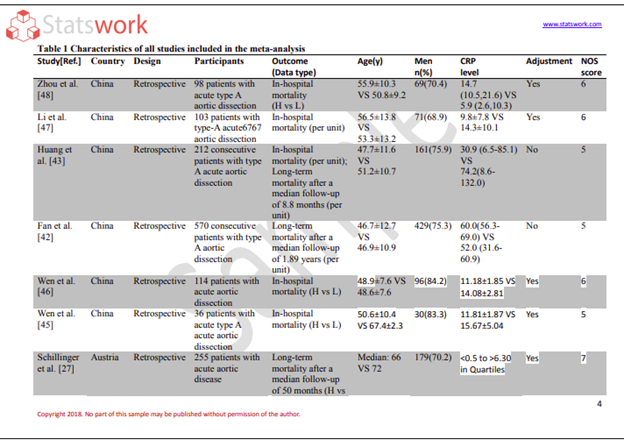
Meta-Analysis Research Services
- Data Collection Services
- Sample Work
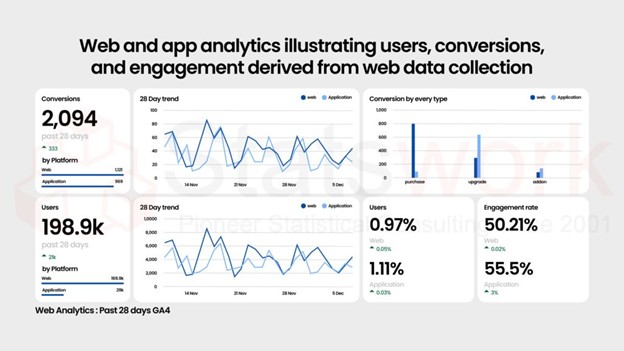
Data Collection Services
- Statistical & Biostatistics services
- Sample Work
Statistical Programming & Biostatistics services
- Data Management Services
- Sample Work
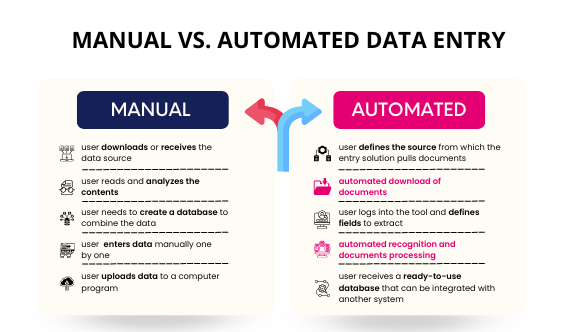
Data Management Services
- Research methodology services
- Sample Work
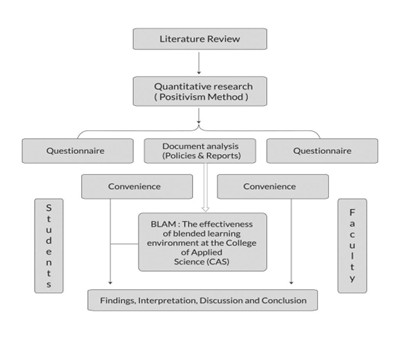
Research methodology services
- Tool Development Services
- Sample Work
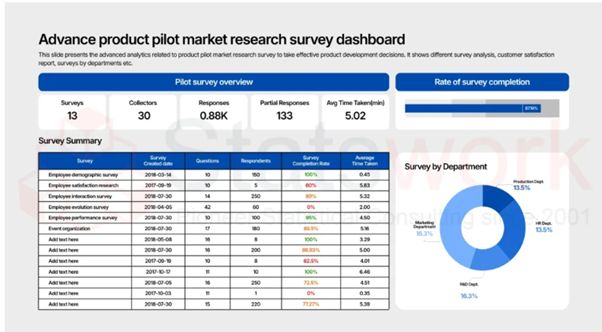
Tool development services
- Statistical Interpretation services
-
Statistical Interpretation services
- Sample Work
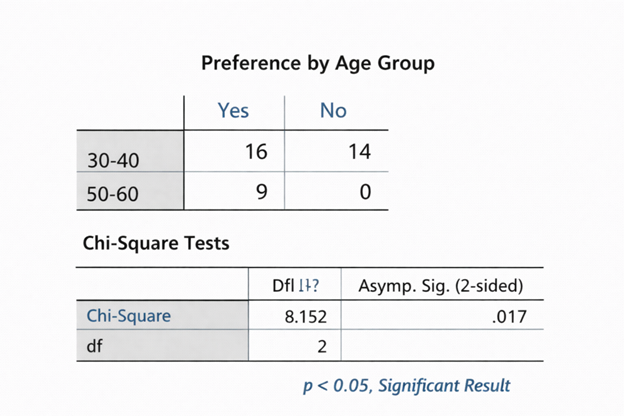
Statistical Interpretation services
-
- Sample Size Calculation Services
-
Sample Size Calculation Services
- Sample Work
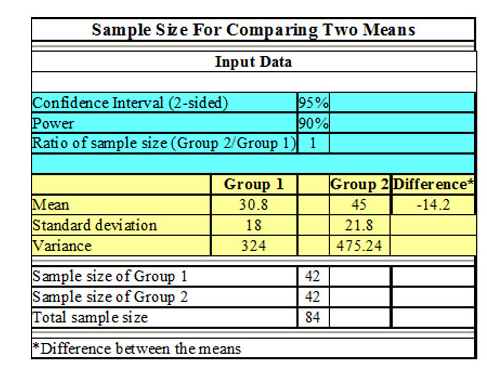
Sample Size Calculation Services
-
- AI & ML Services
-
Artificial Intelligence and Machine Learning Services
- Sample Work
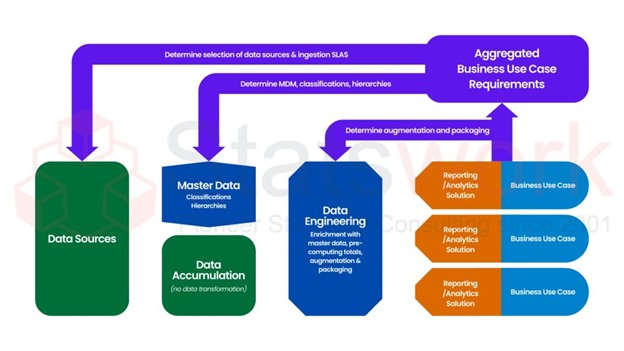
Artificial Intelligence and Machine Learning Services
-
- Meaningful Visualization Services
- Thought Leadership Services
- Report Generation Services
-
Report generation Service
- Sample Work
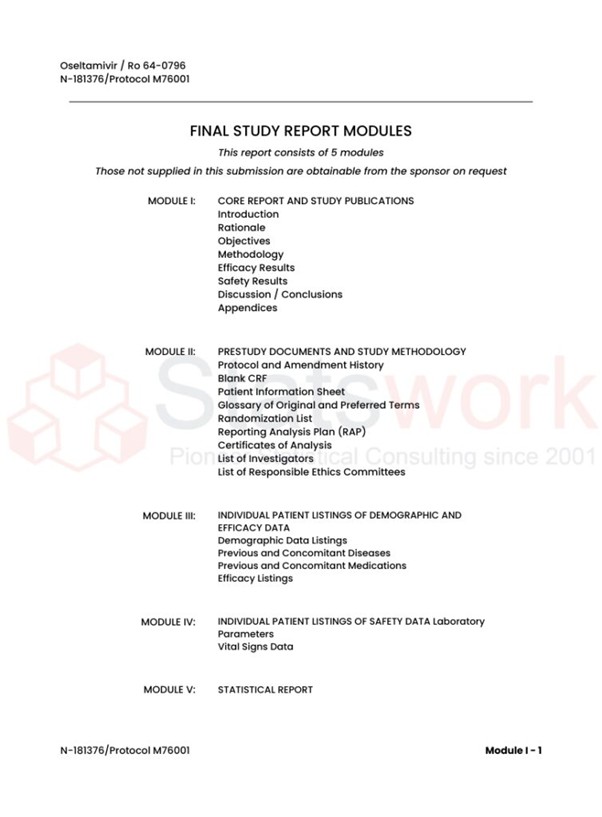
Report generation Services
-
- Data Analysis services
- Industries
- About Us
- Blog
- Insights
- Contact Us
- Services
- Data Analysis services
- Sample Work
Data Analysis services
- Secondary Qualitative Research Services
- Secondary Quantitative Research Services
- Meta-Analysis Research services
- Sample Work
Meta-Analysis Research Services
- Data Collection Services
- Sample Work
Data Collection Services
- Statistical & Biostatistics services
- Sample Work
Statistical Programming & Biostatistics services
- Data Management Services
- Sample Work
Data Management Services
- Research methodology services
- Sample Work
Research methodology services
- Tool Development Services
- Sample Work
Tool development services
- Statistical Interpretation services
-
Statistical Interpretation services
- Sample Work
Statistical Interpretation services
-
- Sample Size Calculation Services
-
Sample Size Calculation Services
- Sample Work
Sample Size Calculation Services
-
- AI & ML Services
-
Artificial Intelligence and Machine Learning Services
- Sample Work
Artificial Intelligence and Machine Learning Services
-
- Meaningful Visualization Services
- Thought Leadership Services
- Report Generation Services
-
Report generation Service
- Sample Work
Report generation Services
-
- Data Analysis services
- Industries
- About Us
- Blog
- Insights
- Contact Us
What Are the Various Types of Research Bias in Qualitative Research? Give a Solution to Overcome These Bias
Qualitative Research Service
News & Trends
Recommended Reads
Contact us
In Brief:
Research bias in qualitative research happens when a study’s design, sampling, or interpretation quietly favors one outcome over another. Because qualitative work relies on descriptive, non-numeric data — interviews, focus groups, field notes — it is especially vulnerable to distortion if the researcher isn’t deliberate about objectivity. This guide covers the main types of research bias, bias in qualitative research examples, and practical solutions on how to avoid bias in research.
Understanding Bias in Qualitative Research
When the sample is no longer representative of the population it was supposed to represent because the inclusion criterion was the variable of interest itself, we have a case of bias.
Qualitative study is particularly susceptible to the problem of bias. Because of its subjective nature, it becomes difficult to detach one’s perception from the results — this is one of the reasons why qualitative studies often get criticized for lack of documentation and transparency. Bias can be categorized into three types, which are interrelated and overlap with each other: information bias, selection bias, and confounding bias [1]. Failure to control them leads to ambiguous or incorrect conclusions, which is extremely dangerous for clinical, social, and business research.
Types of Research Bias in Qualitative Research
1. Information Bias
Information bias results from data acquisition, documentation, or manipulation, which may involve data gaps. The causes of information bias include inconsistent classification, self-reporting, and retrospective memory – the latter being the reason for recall bias.
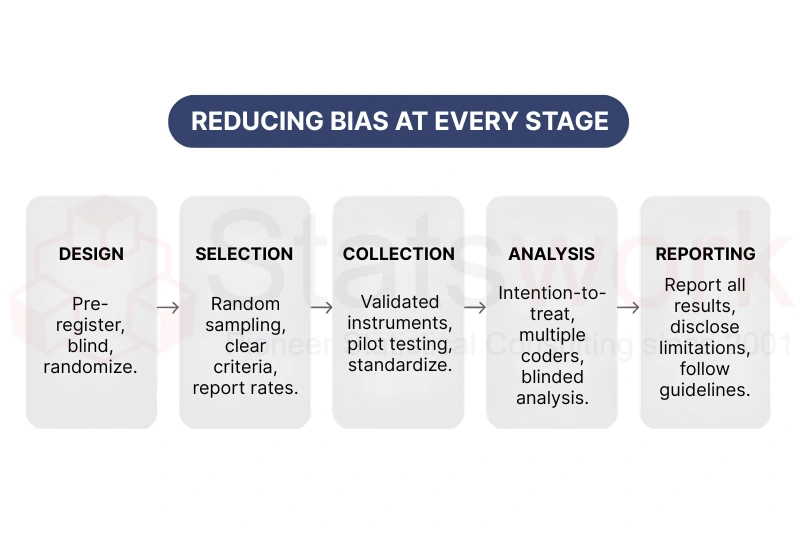
Solutions: Use multiple independent data sources, standard measurement devices, similar comparison groups, and blinding of the exposure or intervention.
2. Selection Bias
Selection bias takes place when the subjects or samples selected for analysis do not represent the target population – for example, when the drop-out rate is higher than that of the non-dropouts [2]. This shows how selection bias differs from information bias – while one affects sample selection, the other affects the recorded data.
Solutions: Perform random sampling of sub-samples; specify baseline comparison and allocation in advance and take care of the missing data.
3. Confounding Bias
The confounding bias emerges when an extraneous factor affects both exposure and outcome, thus distorting their real association. Confounding bias is closely connected to researcher bias, when the research is conducted in such a way to support a pre-existing assumption; the phenomenon is referred to as the confirmation bias in research.
Solutions: Use randomization if possible; matching and restriction of confounders.
4. Researcher and Questionnaire Bias
Bias that comes from preference of the researcher in an expected result can affect the way the questions will be formulated, interviews conducted and interpreted; this is called the interviewer bias or questionnaire bias, which is one of the most prevalent bias in qualitative research examples because the researcher himself/herself serves as the main tool for collecting the information [3].
Solution: Test the questionnaires for neutral language and standardize the interviews, use a second reviewer.
5. Other Biases
Take heed of such biases as social desirability bias (answers given for acceptance), response bias and non-response bias, attrition bias (people leaving are different from the people who remain), publication bias (“positive” findings preferred), observer bias (observer’s expectations affect the observation). The culture, chronology, channeling, and performance biases should also be mentioned in the methodology section. Identifying biases from the very beginning helps tremendously in designing the tools against them prior to gathering data [4].
Research Bias in Market Research
The same issues extend beyond academia. Research bias in market research often shows up as sampling bias toward easily reachable customers, bias in focus groups, or interviewer bias during stakeholder interviews. Since business decisions rest on these findings, unexamined bias can be just as costly here as in clinical research.
How to Avoid Bias in Research
- Reflexivity — ensure that you keep a reflexive journal recording assumptions and positionality of the researcher during the study.
- Triangulation — check findings through multiple methods/sources/investigators.
- Use member checking – verify interpretations by participants.
- Ensure data saturation – continue collecting until saturation.
- Provide thick description – rich descriptions ensure transferability.
- Keep an audit trail – record all methodological decisions made.
- Peer debriefing – ensure that your work is challenged by your colleagues.
- Protocol standardization – take ideas from rigorous methodologies such as case-control, cohort, RCT, and cross-sectional studies even in mixed-methods research.
Ensure informed consent is clearly provided without directing participants’ responses.
These steps strengthen the reliability, validity, and overall research integrity of a study, whether it’s a single interview-based project or a large mixed-methods design.
Conclusion
Although it is nearly impossible to eliminate bias in qualitative research, it can be easily detected, documented, and greatly minimized through methodological practice. Researchers, when constantly aware of the information bias, selection bias, confounding bias, confirmation bias, as well as other biases, and using methods like triangulation, reflexivity, member checks, and standardization, create research that stands out in terms of credibility, validity, and generalizability.
When implementing these practices seems difficult, Statswork provides professional assistance throughout the entire process, including qualitative data collection service, questionnaire development service, and methodology consultation service, thus ensuring that the research will be designed in such a way that the bias will be avoided from its very start. Contact Statswork today to increase the credibility of your qualitative research.
Frequently asked question:
Researcher bias in qualitative research can be reduced by practicing reflexivity, using standardized interview protocols, maintaining detailed documentation, applying data triangulation, conducting peer debriefing, and validating findings through member checking to ensure the results accurately reflect participants’ perspectives.
The seven common qualitative research methods are phenomenology, grounded theory, ethnography, case study, narrative research, action research, and historical research, each designed to explore human experiences, behaviors, and social contexts from different perspectives.
Qualitative research may be affected by researcher bias, selection bias, confirmation bias, interviewer bias, participant bias, recall bias, social desirability bias, and interpretation bias, all of which can influence data collection, analysis, and the credibility of the findings.
The seven commonly recognized types of bias are selection bias, confirmation bias, sampling bias, observer bias, recall bias, response bias, and publication bias, each of which can distort research outcomes if not properly controlled.
Eight common types of bias include selection bias, confirmation bias, observer bias, recall bias, response bias, interviewer bias, publication bias, and survivorship bias, all of which can reduce the validity and reliability of research results.
Five common types of bias are selection bias, confirmation bias, observer bias, recall bias, and response bias, which can influence participant selection, data collection, interpretation, and the overall accuracy of research findings.
Reference
- Mutanana, N., & Shoko, C. T. (2026). Addressing the efficacy of quality in qualitative research: a review of the current discourse. International Journal of Qualitative Methods, 25, 16094069261432368. https://journals.sagepub.com/doi/full
- Alum, E. U., Egwu, C. K., Manjula, V. S., Ekpang, P. O., Ekpang, J. E., Echegu, D. A., … & Uti, D. E. (2026). Overcoming the black box challenge: Building Trust in Artificial Intelligence Algorithms in oncology. Technology in Cancer Research & Treatment, 25, 15330338261434649.https://journals.sagepub.com
- Zaal, E., Ongena, Y., van der Velden, N., Loughnan, D., & Hoeks, J. (2026). Unraveling honest responding: a systematic review on the effectiveness of social desirability bias reduction methods in survey research. Quality & Quantity, 60(3), 10359-10391. https://link.springer.com/article/10
- Romeo, G., & Conti, D. (2026). Exploring automation bias in human–AI collaboration: a review and implications for explainable AI. Ai & Society, 41(1), 259-278. https://link.springer.com/article/10.10