

















statswork

Advanced Secondary Quantitative Data Collection Services

We provide secondary quantitative data collection services through quantitative data that helps businesses or researchers understand how secondary quantitative data can be used to gain an accurate analysis.

poster presentation

Understanding Secondary Quantitative Data Collection

Secondary Quantitative Data involves information collected through previous studies or investigations, hence not collected firsthand or directly. The secondary type of data may include studies from academicians, government documents, census data, among others.

This type of data involves precise figures aimed at enhancing research or study objectives, making it an appropriate choice when conducting research. It may require evaluation on its relevance before application. Organizations can benefit in terms of saving time by using secondary quantitative data collection services, as they provide quality data for decision-making.

Statswork offers secondary quantitative data collection service provider solutions that assist businesses and researchers in data collection, validation, and organization of secondary data for quantitative analysis obtained from authentic sources.

Concept and Purpose of Secondary Quantitative Data Collection Services

The secondary quantitative data collection process is more concerned about collecting structured numerical data from reliable sources that already exist.

Introduction to Research Tool Development icon

Introduction to Secondary Quantitative Data Collection Services

Secondary quantitative data collection is a method which includes finding, collecting and processing numerical information already presented in public domain regarding research aims. The data collected through this method is precisely chosen to allow accurate measurement of research variables and get appropriate information. The data is not collected directly. It is sourced from reputable materials such as governmental documents, academic works, company statistics, etc.

Steps involved in secondary quantitative data collection include:
  • Study of research aims and data needs
  • Finding appropriate secondary data sources
  • Gathering quantitative data from reputable sources
  • Checking the quality and validity of gathered data
  • Cleaning up and processing structured data
  • Carrying out data reliability and consistency check
  • Evaluation and interpretation of the results

Therefore, secondary quantitative data collection services are a valuable tool for companies willing to make data-based decisions and conclusions.

Purpose of Research Tool Development icon

Usefulness of Secondary Quantitative Data Collection Services

Secondary quantitative data collection services can be used for various purposes such as business planning, market research, prediction, academic research, and policymaking.

The role played by professional secondary quantitative data collection service providers in:

  • Effective and reliable collection of numerical data
  • Measurement of research variables systematically
  • Saving on both time and money than conducting primary research
  • Aiding in secondary data collection for market research
  • Better statistical analysis and forecasting
  • Appropriate identification of patterns and trends
  • Boosting the validity of research results
  • Quick decision making

Inadequate selection or validation of secondary data will lead to incorrect analysis, incompleteness, or even erroneous results

Secondary Quantitative Data collection for Academic and Business Research

Our services give researchers easy and fast access to quality secondary data, and such research could be both academic and business oriented.

Secondary Data Collection
Structured Data Curation from Multiple Sources
Data Validation and Quality Checking
Data Triangulation Across Sources
Dataset Preparation for Statistical Analysis and Modelling

Secondary Data Collection

  • We engage in the collection of secondary data for research purposes using suitable internal as well as external sources.
  • Validated data sets are provided in accordance with research objectives.

Structured Data Curation from Multiple Sources

  • We deliver organized data curation from surveys, report data, and archival data.
  • Our databases are well organized and ready to be used.

Data Validation and Quality Checking

  • We offer data validation and quality checks to ensure accuracy and reliability.
  • We offer high-quality datasets for research and commercial purposes.

Data Triangulation Across Sources

  • We offer data triangulation on multiple sources to enhance validity and relevance.
  • All data is cross verified for confident analyses.

Dataset Preparation for Statistical Analysis and Modelling

  • We offer data preparation for statistics, hypothesis testing, and predictive modeling.
  • With analysis-ready data that is platform-ecosystem compatible.

Our industry focused

Our secondary data collection for market research service delivers industry research standards on quality to ensure accuracy, consistency, reliability, and compliance with academic and business research requirements.

Validation Techniques Adopted in Secondary Quantitative Data Collection Services

The accuracy and precision of secondary quantitative data collection services require appropriate validation of the existing data sets. As the data is sourced from an external source, it needs to be validated prior to its use for academic or business purposes. StatsWork adopts essential techniques to attain accuracy.

Source Validation

This technique verifies the authenticity of data collected from credible sources.

Reliability Testing icon

Techniques adopted

  • Government resources
  • Academic literature
  • Industry reports
  • Annual reports on organizations
  • Global data sets

It enhances the quality of secondary quantitative data collection services.

Validity Testing icon

Data Precision Validation

Techniques adopted:

  • Comparing figures with other sources
  • Total and category verification
  • Identifying duplicates
  • Missing data checking
  • Validating units and format

Essential for secondary quantitative data collection for business research.

Cronbach’s Alpha icon

Validation of Relevance

Methods include:

  • Variable/objective match analysis
  • Industry-relevant data sets
  • Geographical validity assessment
  • Target audience relevance
  • Proper time identification

Applicable for secondary data collection for research projects.

Tools & Technologies Involved

At StatsWork, we employ the use of sophisticated tools in order to obtain, validate, and analyze the data for secondary quantitative data collection services.

01

R / Python

  • Data cleaning and pre-processing
  • Secondary dataset statistical analysis
  • Identification of trends and forecasts
  • Automation of validation

Ideal for secondary quantitative data collection services for business research.

02

SPSS / SAS

  • Analysis of large data sets
  • Correlation and regression tests
  • Survey & Market research analysis
  • Business Reporting

Popular software tools utilized for secondary data collection in market research.

03

Excel / PowerBI

Effective for secondary data collection assistance in research work.

Our Secondary Quantitative Data Collection Process

At StatsWork, we apply a rigorous and systematic method to offer our secondary quantitative data collection service which helps you get reliable datasets ready for analysis. Our research and analytics expertise enable us to guarantee successful secondary data collection services for your businesses and studies.

Research Requirement Analysis
  • Analyzing research goals and data requirements
  • Identifying important variables and their measurement
  • Delineating industry, market, or academic domain

Designing secondary quantitative data collection framework for business research

Secondary Data Sources
  • Selecting reliable sources of secondary data
  • Identifying databases from government and industries
  • Matching suitable datasets with your research objective
  • Secondary data sourcing service
Data Collection and Compilation
  • Extracting structured numeric information from chosen sources
  • Compiling multiple sources of information into single data set
  • Organization of datasets to allow easy reading and usage
  • Secondary data gathering assistance for research projects
Data Cleaning and Validation
  • Deduplication and elimination of missing information
  • Multiple source verification of accuracy
  • Standardizing formats, units and classifications
  • Professional secondary quantitative data collection service provider process
Statistical Analysis and Reporting
  • Identification of trends and comparisons
  • Market and business performance analysis
  • Forecasting and reporting based on evidence
  • Very useful outputs from secondary data collection for market research
Research Insights and Deliverables

Outcomes of Secondary Quantitative Data Collection Services

There are various outcomes that businesses expect when availing themselves of secondary quantitative data collection services.

Expected Outcomes of Secondary Quantitative Data Collection Services

The expected outcomes are as follows:

  • Systematic collection of numerical data
  • Data from credible sources
  • Faster conclusion of the research process with cost savings
  • Improved trend analysis and forecasting
  • Sound decision-making
  • Improved credibility of the research results

Advantages of Secondary Quantitative Data Collection Services by StatsWork

  • Use of verified and up-to-date data sets
  • Professionals to handle large data sets
  • Delivery of cleaned data for analysis
  • Time saving due to minimal manual effort required
  • Business and research studies support

Research Support from StatsWork

Support for secondary data collection in research projects

  • Reporting and dashboard services
  • Statistical analysis services
  • Data cleaning and validation services
  • Interpretation of research data

Industries Requiring our Secondary Quantitative Data Collection Services

  • Marketing Research & Consultancy
  • Healthcare & Pharmaceuticals
  • Banking & Finance
  • University Research
  • E-commerce & Retail
  • Government Policy Research

Reasons to Choose Statswork for Secondary Quantitative Data Collection Services

Leading secondary quantitative data collection agency

  • Secondary quantitative data collection experts for business research
  • Quick and discreet delivery
  • Custom secondary data sourcing services
  • Insights into growth & planning
Success Stories
Insights - Must Read Articles

Data Dictionary Mapping

The medical device industry is about to experience a seismic shift…

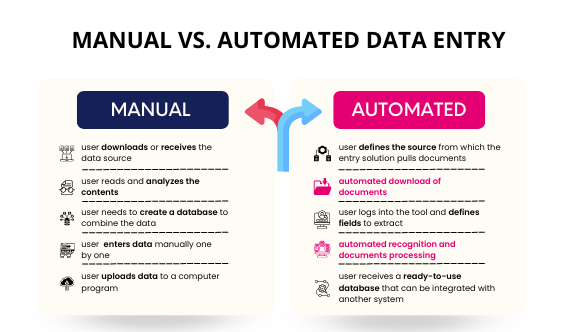
The Next Era of Data Entry

Healthcare is being impacted by two emerging technology tools – AI…

Reduces Errors and Boosts Efficiency

As organizations utilize changing data in the digital world, so is the data entry….

Frequently Asked Questions

1. How can Statswork support our secondary quantitative data collection needs?

We identify reliable and relevant data sources to collect large-scale quantitative datasets from trusted platforms. Our process includes thorough data validation and quality assurance, delivering clean, ready-to-use datasets for effective analysis and decision-making.

2. What is secondary quantitative data collection?

Secondary data collection is the process of gathering numerical data from existing sources such as databases, reports, surveys, and published studies. It is a cost-effective approach compared to primary data collection and is widely used for research, benchmarking, and analysis.

3. What sources are used for secondary quantitative data collection?

We source data from a wide range of reliable platforms, including government databases and statistical reports, industry reports and market research publications, academic journals and research papers, as well as online datasets and organizational records.

4. Can Statswork customize data collection based on our business requirements?

We provide tailored data sourcing aligned with your objectives, including industry-specific dataset identification. Our solutions offer flexible data formats for easy integration and are scalable to support projects of all sizes.

5. What are the advantages of using secondary quantitative data?

Secondary data collection offers several advantages, including saving time and reducing data collection costs while providing access to large and diverse datasets. It enables effective trend analysis and benchmarking, supporting faster and more informed decision-making.

6. How does Statswork ensure the quality and accuracy of collected data?

We ensure data quality by verifying sources for credibility, followed by thorough cleaning and consistency checks. Duplicates and outdated information are removed, resulting in well-structured datasets that support reliable and accurate analysis.

Getting Expert Secondary Quantitative Data Collection Support